
China Top 10 Skin Aesthetics Courses for Global Buyers?

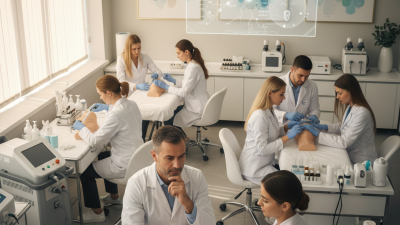
China has become an important destination for professionals exploring advanced aesthetic education. Its major cities offer hospitals, private clinics, medical universities, and specialized training centers. For global buyers, the appeal is practical: modern equipment, diverse patient cases, and comparatively flexible course formats. Many skin aesthetics courses include classroom instruction, supervised demonstrations, device practice, and treatment planning. Some also provide interpreters, translated materials, or short residential schedules.

This guide examines ten leading options for international learners and training providers. It considers faculty qualifications, institutional experience, clinical exposure, curriculum depth, language support, and certificate transparency. It also looks at practical details, such as whether learners can observe consultations, review safety protocols, and practice under qualified supervision. These details matter more than polished websites.

A ranking is never perfect.

Course quality may change with instructors, location, and intake dates. A famous institution may not suit every buyer. Some programs emphasize theory, while others focus on lasers, injectables, skin diagnosis, or business operations. Readers should verify current accreditation, trainer registration, insurance requirements, and local rules before paying deposits or traveling. Certificates may support professional development, but they may not grant permission to practice in another country. That distinction is easy to miss.

The selections are designed to support careful comparison, not rushed purchasing. Buyers should request a detailed syllabus, trainer profiles, clinical policies, refund terms, and sample schedules. Real confidence comes from evidence. Even then, every learner should reflect on their own scope of practice, language ability, and patient-safety responsibilities before choosing a course.

China Top 10 Skin Aesthetics Courses for Global Buyers?

What Are Skin Aesthetics Courses in China?

China Top 10 Skin Aesthetics Courses for Global Buyers?

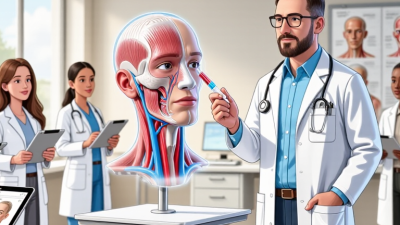
Skin aesthetics courses in China combine medical theory, supervised practice, and clinical risk management. They may cover skin anatomy, consultation skills, facial assessment, device safety, infection control, and post-treatment care. Some programs also teach photography, treatment planning, and patient communication for international clinics.

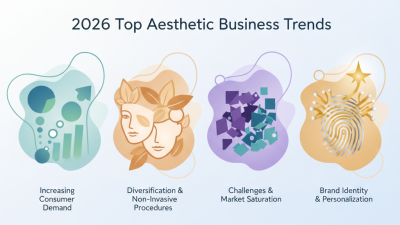
The market context is significant. The ISAPS International Survey on Aesthetic/Cosmetic Procedures 2023 recorded about 34.9 million surgical and non-surgical procedures worldwide. Non-surgical treatments represented roughly 19 million procedures. This demand explains the growth of short courses, hospital-based training, and advanced professional workshops in China. Yet course quality differs. A certificate alone is not enough.

Global buyers should examine instructor credentials, supervised clinical hours, assessment methods, translation support, and local regulatory guidance. Strong programs explain contraindications and emergency referral procedures clearly. They should also separate classroom demonstrations from real patient care. Practice matters. Course materials should reflect current evidence, not only popular techniques. The World Health Organization emphasizes continuous professional education, patient safety, and competent healthcare delivery. These principles apply to aesthetic training as well. Some course pages still blur education with commercial promotion. That deserves careful review. A useful course leaves learners with documented skills, realistic limitations, and safer decision-making habits.

How to Compare China’s Top Skin Aesthetics Training Programs

China’s skin aesthetics courses should be compared by evidence, not promotional rankings. The 2023 ISAPS Global Survey recorded about 19.1 million nonsurgical aesthetic procedures worldwide. That figure signals strong demand, but demand alone cannot prove training quality.

Check each program’s clinical hours, instructor credentials, and supervised case volume. A serious course should explain assessment, contraindications, infection control, and emergency response. Ask whether learners practise on realistic cases, not only watch demonstrations. Short courses may look efficient. They may also leave major gaps. This is where buyers must be slightly skeptical.

Curriculum relevance matters for international learners. Compare teaching languages, assessment methods, certification transparency, and access to post-course mentoring. Confirm whether the syllabus reflects current clinical guidance and local professional requirements. The World Health Organization’s Global Patient Safety Action Plan stresses risk reduction, communication, and continuous learning. These principles should appear in practical training, not remain in a brochure.

Market data can provide context, but not a purchasing decision. Grand View Research estimated the global medical aesthetics market at roughly 19 billion US dollars in 2023, with continued growth expected. Fast growth can encourage rushed programs. Look for audited outcomes, clearly stated limitations, and independent faculty experience. Training providers should disclose what graduates can and cannot perform after completion. That detail is often missing. It should not be.

What Subjects and Practical Skills Do These Courses Cover?

China’s leading skin aesthetics courses for global buyers usually combine ten core subjects: skin anatomy, dermatology basics, consultation, skin analysis, treatment planning, hygiene, device operation, aftercare, documentation, and complication management. Lessons often use real case photographs, supervised demonstrations, and structured assessments. Learners may examine pigmentation, acne-prone skin, dehydration, and sensitivity under controlled lighting. These details matter because poor analysis can lead to unsuitable treatment choices.

Practical sessions may include cleansing protocols, consultation scripts, patch testing, equipment settings, and recovery guidance. Instructors should explain when a procedure is unsuitable and when medical referral is necessary. Students also practise recording consent, treatment parameters, skin responses, and follow-up observations. Some programs discuss regulated procedures only within lawful clinical boundaries. Experience helps, but classroom confidence can be misleading. A quiet learner may still need more supervised practice.

Tips Ask for trainer qualifications, lesson hours, assessment methods, and translated materials. Confirm whether practical training uses safe, approved equipment. Request evidence of hygiene procedures and emergency protocols. Check local licensing rules before purchasing any course. A certificate alone cannot replace clinical judgment. Choose training with feedback, not only demonstrations. Safety comes first.

How Can Global Buyers Verify Course Quality and Credentials?

China Top 10 Skin Aesthetics Courses for Global Buyers

Global buyers should verify course quality before comparing prices or rankings. A polished website is not proof. Request the full syllabus, instructor profiles, teaching hours, and assessment methods. Qualified instructors should show relevant medical education, current practice, and verifiable credentials. Check certificates through the issuing institution, not only through uploaded images.

Look for detailed modules on skin anatomy, consultation, hygiene, contraindications, emergency response, and ethical communication. Practical training should state class size, supervised hours, equipment access, and legal boundaries. Training must follow the buyer’s local regulations. A certificate may confirm attendance, but it may not grant permission to provide clinical services. Ask for sample assessments, graduate references, and recent course dates. Some providers may not answer every question clearly. That matters.

Tips: Verify the institution’s registration and physical address independently. Request a live video tour of the classroom. Compare the advertised syllabus with the actual timetable. Ask whether translations are professionally reviewed. Confirm how complaints, cancellations, and certificate corrections are handled. Keep written records of every promise. Small details reveal reliability.

Real experience also deserves careful review. Student testimonials should include dates, learning outcomes, and realistic limitations. Photos alone prove little. An honest provider should explain what the course cannot teach. Buyers can also ask for a short interview with a trainer and a sample theory lesson. If the answers feel rushed, pause before paying.

What Should International Students Know Before Enrolling?

China Top 10 Skin Aesthetics Courses for Global Buyers

International students should treat “top ten” lists as starting points, not final proof. Course quality depends on faculty credentials, supervised practice, assessment standards, and legal recognition. Look for training in skin anatomy, consultation, infection prevention, documentation, and emergency response. A polished classroom is not enough. Ask how many practical hours are included and who supervises them.

Tips: Request the full syllabus before paying. Confirm teaching language, translated materials, attendance rules, and assessment methods. Check whether your previous qualifications are accepted. Ask if the certificate has value in your home country, since recognition differs widely. Confirm visa guidance, insurance expectations, and refund terms in writing. Contact recent international graduates when possible.

Good programs explain what students may legally perform after graduation. They should separate theory from supervised clinical experience and provide clear consent procedures. Faculty should discuss realistic results, possible complications, and referral pathways. Be cautious when a course promises fast income or universal professional recognition. I have found that marketing often sounds stronger than the evidence. That deserves reflection. Also, translation can hide important safety details. Bring a qualified interpreter if technical terms remain unclear. A shorter course may suit experienced clinicians, while beginners usually need more anatomy and supervised practice. Your choice should match your training level, local regulations, and intended scope of work.

China Top 10 Skin Aesthetics Courses for Global Buyers? What Should International Students Know Before Enrolling?
No. Course Area Common Training Hubs Typical Duration Indicative Tuition Range* Core Learning Content Practical Training Typical Entry Requirements Key Points for International Students
1 Professional Skin Analysis and Consultation Beijing, Shanghai, Guangzhou, Chengdu 3–10 days RMB 3,000–12,000 Skin typing, consultation workflows, contraindication screening, client records and treatment planning. Demonstration and supervised analysis using non-invasive diagnostic methods. Usually open to beginners; basic anatomy is helpful. Confirm whether the course teaches accepted consultation standards and provides bilingual materials.
2 Advanced Facial Care and Professional Peels Shanghai, Guangzhou, Shenzhen, Hangzhou 5–15 days RMB 5,000–18,000 Facial protocols, exfoliation principles, superficial peels, aftercare and adverse-reaction management. Model practice under instructor supervision; product and protocol selection exercises. Basic skincare knowledge; some providers prefer salon experience. Ask about permitted peel strengths, ingredient compliance and local practice restrictions in the destination country.
3 Microneedling and Collagen-Induction Techniques Guangzhou, Shenzhen, Shanghai, Chengdu 2–7 days RMB 4,000–15,000 Indications, device settings, hygiene, treatment depth, infection prevention and post-treatment care. Hands-on practice may be available, subject to local rules and model consent. Often requires prior beauty, nursing or clinical experience. Verify whether practical sessions use sterile procedures and whether the certificate is educational rather than a medical license.
4 Hydro-Dermabrasion and Non-Invasive Infusion Shanghai, Guangzhou, Shenzhen, Xiamen 2–5 days RMB 3,000–10,000 Hydro-cleansing, suction control, solution selection, skin barrier protection and equipment maintenance. Equipment demonstrations and supervised practice on models or simulated skin. Beginner-friendly; basic hygiene training is recommended. Check machine specifications, electrical standards, consumable compatibility and warranty support.
5 LED Phototherapy and Light-Based Skincare Beijing, Shanghai, Guangzhou, Nanjing 2–5 days RMB 3,000–12,000 Light wavelengths, treatment indications, eye protection, dosage concepts and client screening. Device operation, treatment planning and safety-check simulations. Usually open to beauty professionals and suitable beginners. Request technical specifications, safety documentation and evidence-based usage guidance for each device.
6 Acne, Sensitive-Skin and Barrier-Repair Management Beijing, Shanghai, Chengdu, Hangzhou 3–10 days RMB 4,000–14,000 Acne patterns, sensitivity triggers, barrier function, ingredient selection, referral criteria and home-care planning. Case-study analysis and supervised consultation; invasive procedures are not necessarily included. Suitable for skincare professionals; anatomy fundamentals are useful. Ensure the curriculum clearly distinguishes cosmetic care from diagnosis and medical treatment.
7 Laser and Intense-Pulsed-Light Safety Fundamentals Beijing, Shanghai, Guangzhou, Wuhan 3–15 days RMB 8,000–30,000 Basic laser physics, skin response, risk assessment, eye safety, burns prevention and incident protocols. Equipment demonstrations and safety simulations; clinical operation depends on qualifications and regulations. Commonly aimed at licensed clinicians or experienced operators. International students must check whether their professional license is accepted and whether treatment practice is legally permitted.
8 Injectable Aesthetics Theory and Complication Recognition Beijing, Shanghai, Guangzhou, Chengdu 2–10 days RMB 8,000–35,000 Facial anatomy, consultation, injection planning, product handling, documentation and recognition of urgent complications. May include demonstrations or simulation; live injections depend on professional authorization and local law. Normally restricted to qualified medical professionals. A training certificate does not grant permission to inject. Confirm medical licensing, insurance and scope-of-practice requirements before enrollment.
9 Body Contouring and Non-Invasive Aesthetic Devices Guangzhou, Shenzhen, Shanghai, Chongqing 3–10 days RMB 5,000–20,000 Device principles, client suitability, treatment parameters, contraindications, monitoring and aftercare. Demonstrations and supervised device operation where permitted. Beauty, wellness or clinical background preferred. Review device registration, import requirements, operator training and evidence for advertised outcomes.
10 Clinic Operations, Infection Control and Aesthetic Business Management Shanghai, Beijing, Guangzhou, Shenzhen 3–10 days RMB 3,000–15,000 Standard operating procedures, sterilization principles, record keeping, consent, complaint handling and service design. Audits, workflow simulations, documentation exercises and case discussions. Open to clinic owners, managers and experienced practitioners. Useful for buyers building an international service model; local healthcare, advertising and data-protection laws still apply.
*Tuition figures are indicative market ranges in RMB for short-term professional training in China and may exclude accommodation, travel, translation, examination fees, consumables and equipment. Course duration, language support, hands-on access, certificates and legal eligibility vary by provider and by the student’s professional status. International students should request a written syllabus, instructor qualifications, refund terms, attendance requirements and confirmation of whether the certificate has recognition in their intended country of practice.