How to Choose the Right Medical Aesthetic Supplies for Your Practice?
Choosing the right medical aesthetic supplies is crucial for any practice. The selection process can feel overwhelming. With various brands and products available, decisions must be made carefully.
Medical aesthetic supplies should meet the needs of practitioners and patients. Consider factors like quality, effectiveness, and cost. Supplies can range from injectables to skincare products. Each item has its own specifications and usage guidelines. It’s important to stay informed about the latest innovations and trends.
However, it's not just about the products you choose. Reflecting on your practice's mission can guide your decisions. Are you prioritizing patient safety or profitability? Evaluating your values can lead to better choices. Eventually, the proper selection will enhance patient satisfaction and improve overall results.
Understanding the Types of Medical Aesthetic Supplies Available
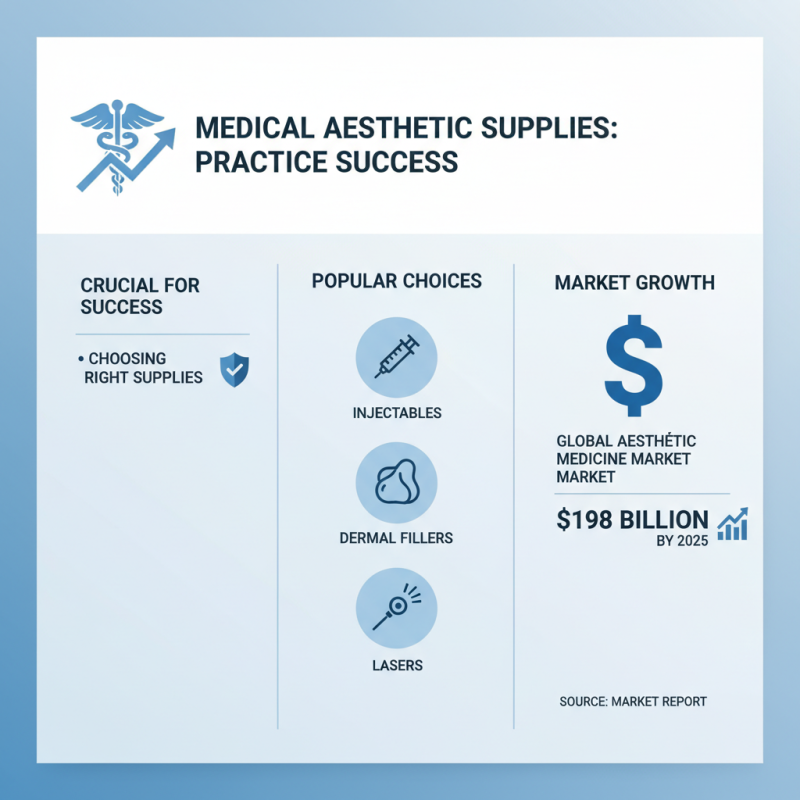
Choosing the right medical aesthetic supplies is crucial for the success of your practice. Various types of supplies serve different purposes. For instance, injectables, dermal fillers, and lasers are popular choices. According to a market report, the global aesthetic medicine market is expected to reach $198 billion by 2025.
When selecting injectables, consider the area of treatment. Botox is widely used for wrinkles. Meanwhile, fillers enhance facial volume. A recent study indicated that 70% of patients preferred non-surgical procedures for their aesthetic needs. This shows the importance of offering a variety of supplies.
Tips: Ensure the quality of your supplies. Poor quality can lead to unsatisfactory results. Additionally, stay informed about new products. The aesthetic market evolves quickly. It’s essential to choose supplies that meet safety standards and patient expectations.
Patients often seek personalized treatments. Offering a range of products can help you cater to their needs. Examine your supply list periodically. Are you missing out on new innovations? A diverse inventory can increase patient satisfaction unless it overwhelms your staff.
Assessing the Quality and Safety Standards of Aesthetic Products
When selecting aesthetic products, assessing quality is crucial. A recent study reveals that 62% of practitioners prioritize safety over cost. This reflects a growing awareness of the potential risks associated with substandard supplies. Quality assurance testing is one way to ensure safety. Regulatory agencies often publish guidelines; however, compliance can vary significantly.
Adverse effects from poor-quality products can damage a practice's reputation. In fact, the National Aesthetic Association reported a 15% increase in patient complaints linked to inferior supplies last year. This statistic urges practitioners to take time evaluating potential suppliers. Product reviews and practitioner experiences offer valuable insights but should not replace rigorous assessment.
Aesthetic procedures also require thorough training. It’s not enough to just use quality products. Continuous education on the latest safety standards is vital. Many clinics overlook this aspect. By being proactive, practitioners can protect both their patients and practices. Focusing on quality and safety will yield long-term benefits.
How to Choose the Right Medical Aesthetic Supplies for Your Practice?
| Product Type |
Quality Standards |
Safety Certifications |
Shelf Life |
Storage Conditions |
| Botulinum Toxin |
ISO 13485 |
FDA Approval |
24 months |
2-8°C |
| Dermal Fillers |
GMP Certified |
CE Marking |
18 months |
Room Temperature |
| Laser Devices |
ISO 9001 |
FDA & IEC Standards |
5 years |
N/A |
| Skincare Products |
Cosmetic GMP |
Dermatologist Approved |
3 years |
Cool, Dry Place |
Evaluating Your Practice's Specific Needs and Goals
Choosing the right medical aesthetic supplies involves careful evaluation of your practice's unique needs and goals.
Consider the services you offer. Do you specialize in injectables, skincare, or laser treatments?
Your focus will guide your purchasing decisions. Assessing your clientele is also crucial.
What do they want? Understanding their preferences will help you choose effective supplies.
Tip: Conduct a survey. Get feedback from patients. This will reveal what products they trust and which new treatments they desire.
It's easy to be swayed by trends. A popular product today may not align with your practice’s vision.
Spend time reflecting on your long-term goals. Are you aiming for gradual growth or rapid expansion?
Your strategy should dictate your supply choices. Maintaining a cohesive treatment plan is essential.
Misalignment can confuse patients and dilute your brand.
Tip: Keep an eye on your competition. But be cautious. What works for them may not suit you.
Learn from others but remain true to your objectives.
Budget Considerations for Purchasing Aesthetic Supplies
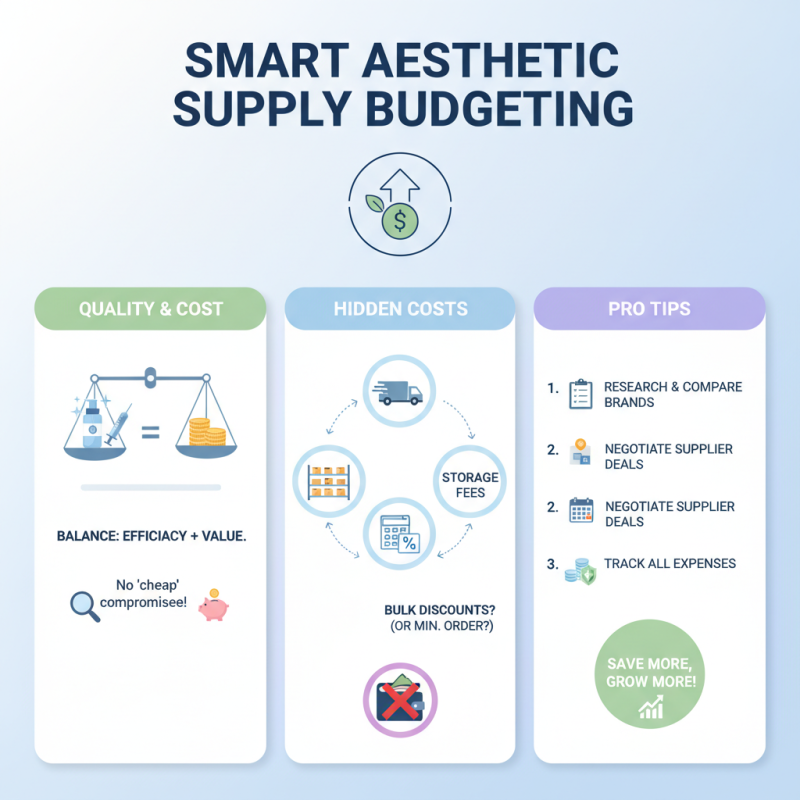
Budgeting for aesthetic supplies can be challenging. It's essential to balance quality and cost. You want effective supplies that won't break the bank. Many practitioners overlook hidden costs, like shipping or storage fees. These can quickly inflate your budget.
Consider your treatment offerings. Allocate funds based on the procedures that generate the most revenue. If certain products offer better patient outcomes, invest more in those. However, avoid impulse purchases. Sometimes, cheaper options can meet basic needs without sacrificing care quality.
Analyze your inventory regularly. Identify items that don't sell well. These can drain your finances and space. Remember, investing wisely in supplies isn’t just about upfront cost. Think long-term. Quality products can lead to patient satisfaction and repeat business.
Finding Reliable Suppliers and Distributors for Medical Aesthetics
When selecting medical aesthetic supplies, it’s crucial to find reliable suppliers and distributors. Quality and safety are paramount in this field. Without a trustworthy supplier, your practice could face significant challenges.
Start by researching potential distributors thoroughly. Look for reviews and testimonials from other practitioners. It’s helpful to attend industry events. Meeting suppliers in person can build trust and clarify doubts. However, not all distributors are forthcoming about their products. Some may exaggerate their offerings. Always ask for certifications and product testing results.
Additionally, consider the supplier's customer service. Timely support can impact your practice positively. Communication should be clear and responsive. If a distributor is hesitant to answer your questions, that’s a red flag. Remember, choosing a supplier is not just about price; it’s about reliability. Reflect on your needs and the consistent quality you expect in your practice.